Water Well Drilling Timmins, ON — Licensed Contractor | Split Rock Drilling

Residential · Rural · Cottage · Farm

Water Well Drilling in Northern Ontario

A properly drilled water well on the Canadian Shield gives your property a permanent, reliable groundwater source — built to Ontario Regulation 903 standards, documented in the provincial well record database, and designed to last for decades.

0 Year Well Lifespan
0 Years Field Experience
0 Typical Flow Rate
0 Well Record Filing

How Water Well Drilling Works

From your first call to clean water at the tap — nine steps with no surprises. Understanding the process helps you plan your project, budget accurately, and ask the right questions before equipment arrives.

Site Assessment & Well Permit

We visit your property to assess terrain, driveway access, setback distances from buildings and septic systems, and working room for the drill rig. A permit is filed with the Ontario Ministry of the Environment before any drilling begins, as required by the Ontario Water Resources Act. Permit records are public and protect your property rights permanently.

Drill Rig Mobilization

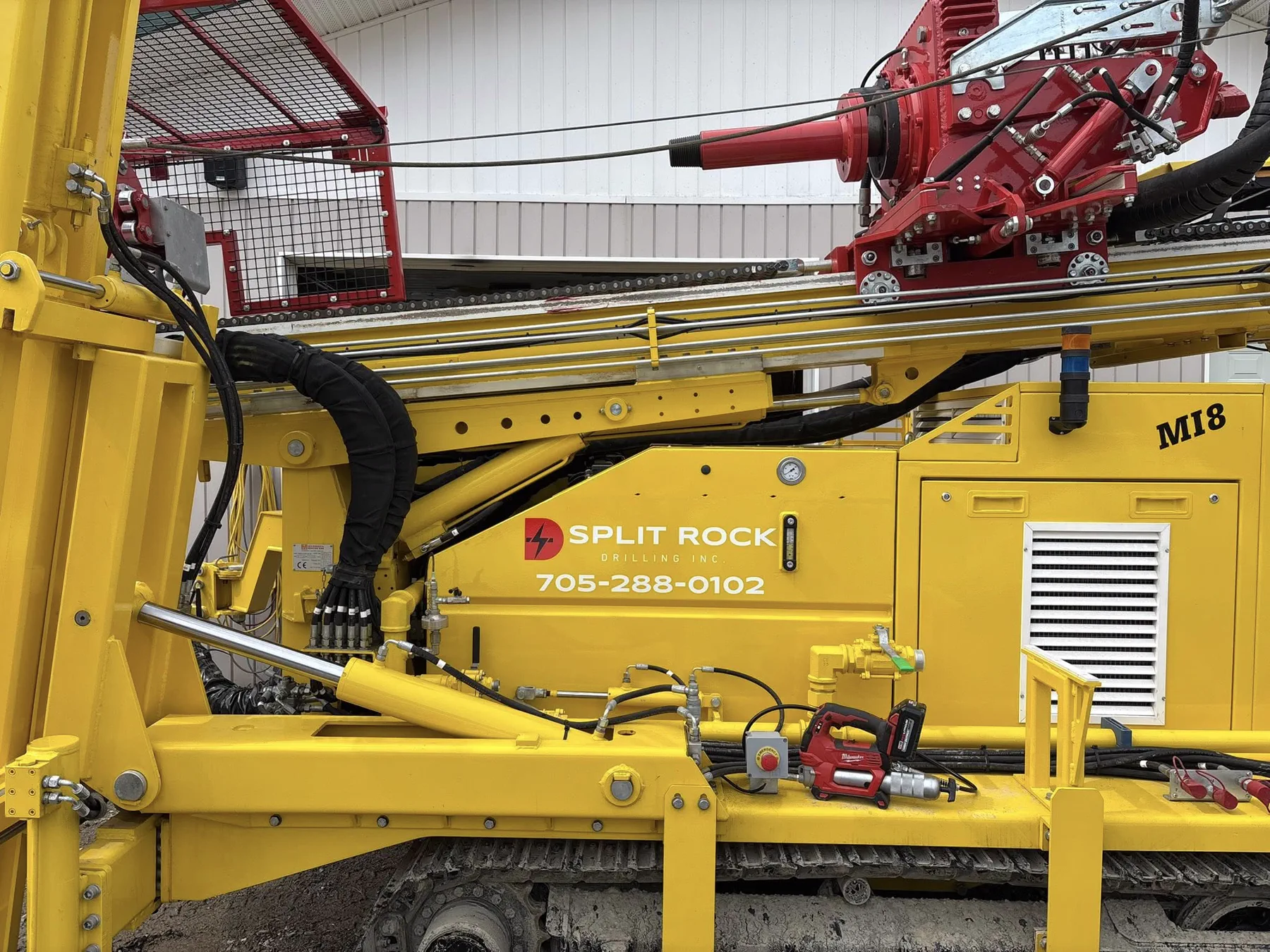
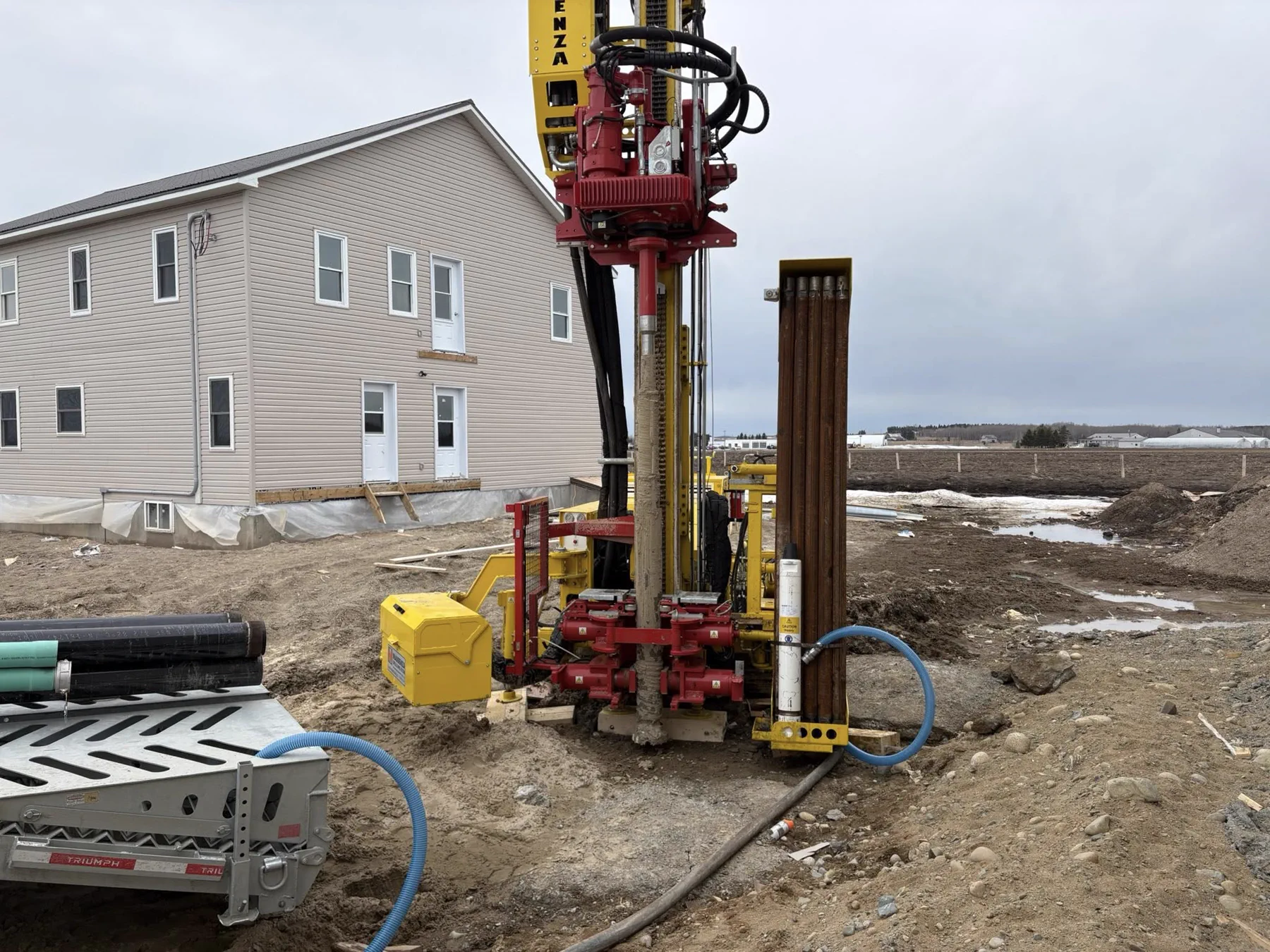
Our tracked rotary percussion rig arrives on-site. We clear a small setup pad, position the rig over your chosen location, and establish a water supply for drilling fluid. Tracked equipment handles rough terrain and soft ground that wheeled rigs can't access — important for Northern Ontario bush lots and seasonal properties.

Drilling Through Overburden

We drill through the surface layer of soil, clay, and sand — the overburden — using a conductor casing to prevent wall collapse. Overburden thickness varies widely across the Timmins region: thin on the Shield outcrops, deeper in the clay belt. We track every metre drilled and note the geological formations encountered.

Penetrating Precambrian Bedrock

Beneath the overburden lies ancient granite and gneiss — the Canadian Shield. A hardened carbide drill bit hammers and rotates through solid rock while compressed air flushes cuttings continuously to surface. Water enters your well through natural fractures and fissures in the rock, not from a underground river or lake. Depth to sufficient water varies by location and is part of what we assess during the site visit.

Installing Steel Well Casing

Ontario Reg 903 requires steel or thermoplastic casing from above ground level to a minimum seating depth in bedrock. The casing is your well's permanent pipe — it keeps the borehole open through the overburden, excludes surface water from your drinking water source, and provides the structural connection point for the pump and pitless adapter. Casing diameter (typically 4–6 inches for residential wells) affects pump sizing.

Grouting the Annular Seal

The annular space between the outside of the casing and the borehole wall is pressure-grouted with bentonite clay or cement grout — from the casing shoe up to ground surface. This is the single most important contamination-prevention step in well construction, and Ontario Reg 903 makes it mandatory. Without a continuous grout seal, surface runoff can migrate down outside the casing and bypass all other protections. We photograph and document every seal we install.

Well Development & Flow Testing

We surge and pump the well to clear drill cuttings and open fractures in the rock. Flow rate is measured and recorded in gallons per minute (GPM). We document static water level (resting depth when no water is being drawn), pumping water level (depth under load), and recovery rate. These numbers determine the right pump size and are included in your Well Completion Report.

Pump & Pressure System Installation

A submersible pump is sized to your household or irrigation demand and lowered into the well on a drop pipe. It connects to your home through a pitless adapter — a sanitary fitting through the casing wall that eliminates the need for a pump house. A pressure tank and controls are installed in your mechanical room. The system is tested before we leave the site.

Well Record Filing & Handoff

Ontario law requires every licensed well contractor to submit a Well Completion Report to the province within 30 days. We file it for you — it is permanently searchable in the Ontario Well Record database (wells.ontario.ca) and documents construction details, geological log, flow test results, and static water levels. You receive a copy, along with our care instructions and recommended water testing protocol. The record is your well's birth certificate and protects any future buyer of your property.

Ontario Regulation 903 — Water Wells

Every well we drill must comply with Ontario Regulation 903 under the Ontario Water Resources Act. This covers casing standards, annular seal requirements, setback distances, sanitary well cap specifications, and mandatory well record submission. We build every well as if a Ministry inspector is watching — because sometimes they are. Read Ontario Reg 903 →

Anatomy of a Properly Constructed Well

Every component serves a purpose. Ontario Regulation 903 specifies requirements for each layer — protecting your groundwater from the surface down to the bedrock aquifer.

Layer by Layer

Sanitary Well Cap

Vermin-proof, vented cap seals the top of the casing. Required by Ontario Reg 903. Keeps insects, debris, and surface water out of the well bore.

Steel Well Casing

Minimum 4-inch diameter steel or thermoplastic pipe that lines the borehole. Extends from above grade to minimum seating depth in bedrock. Keeps the borehole open and excludes surface water.

Grout Seal (Annular Seal)

Bentonite clay or cement fills the annular space between the casing and borehole wall from surface to bedrock. Mandated by Ontario Reg 903. The critical barrier that prevents surface water from contaminating your aquifer.

Overburden

Surface soils, clay, and sand above bedrock. Typically 1–15 metres thick across the Timmins region. The overburden zone is sealed from the well by the casing and grout — no overburden water should enter your supply.

Precambrian Bedrock

Ancient Canadian Shield granite and gneiss. Water enters the well through natural fractures and fissures — not from a lake or underground river. Bedrock wells are naturally protected from surface contamination once properly cased and sealed.

Water Column & Aquifer Zone

Groundwater naturally fills the open borehole to its static level. The pump draws from this column. Flow rate (GPM) and static water level are measured during development and recorded in your Well Completion Report.

Submersible Pump

Sealed electric pump positioned below the static water level. Sized to match your household or irrigation demand. Connected to your home through a pitless adapter — a sanitary through-wall fitting that eliminates the need for a pump house.

Groundwater Protection Starts at Construction

Ontario Regulation 903 exists because groundwater contamination is invisible until it's in your glass, hard to reverse, and expensive to remediate. A properly constructed well is your first and best line of defence.

Casing

Casing Excludes Surface Water

Steel casing seated into bedrock physically blocks surface runoff, shallow groundwater, and any contaminants near the surface from entering your water supply. Casing depth is not optional — it's the foundation of every safe well.

Grout Seal

The Grout Seal Is Non-Negotiable

Ontario Reg 903 requires a continuous annular seal from casing shoe to surface. Without it, water can migrate down the outside of the casing and bypass all other protections. We photograph every seal we install and include the documentation in your file.

Well Records

Well Records Protect Future Owners

Every well we drill is filed with the province and searchable at wells.ontario.ca — permanently. When you sell your property, buyers verify construction quality. If your well ever needs service, any licensed driller can pull the original specs. The record is your well's birth certificate.

Setbacks

Setback Distances Are the Law

Ontario Reg 903 specifies minimum horizontal distances between your well and contamination sources — septic systems, fuel tanks, barnyards, and property lines. We calculate these at the planning stage so your well location is compliant from day one.

Water Testing

Test Before You Drink

After development, we recommend testing for bacteria (total coliform, E. coli), nitrates, and parameters specific to your area. We disinfect the well before handoff and guide you on sampling protocol and accredited labs. A new well should always be tested before first use.

Licensing

Licensed Contractors Only

Under the Ontario Water Resources Act, only licensed well contractors may drill, deepen, or alter a water well. Licensing requires passing provincial exams and carrying liability insurance. Verify any contractor's licence at ontario.ca before signing anything.

Life Without a Well vs. Life With One

For rural property owners, a properly drilled bedrock well is transformational — financially, practically, and for peace of mind.

Before

Life on Trucked Water

  • $300–$600 per water delivery every 2–4 weeks
  • Anxiety about running dry over long weekends or winter road closures
  • No reliable water for fire suppression, livestock, or irrigation
  • Old dug well: bacterial contamination risk, low yield, freezes in winter
  • Property harder to mortgage or sell without a confirmed water source
  • No control — dependent on delivery schedules and driver availability
After

Life with a Drilled Well

  • Unlimited clean water from your own bedrock aquifer, year-round
  • $0 per month in delivery costs — investment typically recovered in 3–5 years
  • Cold, consistent groundwater that rarely freezes at bedrock depth
  • Full water use for fire suppression, livestock watering, and irrigation
  • Property becomes mortgageable and commands stronger resale value
  • Water test results and well record on file — transparency for any future buyer

Investment, Not Just a Cost

The average drilled well in Northern Ontario costs less than three years of water delivery. The well lasts 40–60+ years. The math works — and the independence is priceless for rural properties that depend on consistent water access.

Northern Ontario Is Our Backyard

We know what the Timmins basin looks like at 80 feet. We know where the overburden runs deep in the clay belt, and where you hit good fracture water quickly near the Shield outcrops. That local knowledge isn't something you can Google.

Regulation Compliant

Ontario Reg 903 on Every Well

Proper casing depth, continuous grout seal, sanitary cap, mandated setbacks, and provincial well record filing. No shortcuts.

Transparent Pricing

Written Quotes, Clear Rates

Per-metre drilling rates quoted in writing before mobilization. No ambiguous day-rate surprises when the geology takes longer than expected.

Licensed Well Contractor
  • Verifiable at ontario.ca
Well Records Filed Within 30 Days
  • Required by law — we always deliver
Serving Timmins & Northern Ontario
  • Cochrane · Kapuskasing · Kirkland Lake · and beyond

Licensed Water Well Drilling Contractor — Timmins & Northern Ontario

Split Rock Drilling Inc. is a licensed water well contractor based in Timmins, Ontario. As a registered well drilling company under Ontario WWR #C-8309 and member of the Ontario Ground Water Association (OGWA), every water well we install meets provincial standards and is filed in the public well record within 30 days of completion.

Whether you're looking for a residential water well drilling contractor for a new build, a rural property, a cottage lot, or a farm — Split Rock handles the complete job in-house. One contractor from permit to pump. No subcontracting.

  • Licensed well drilling contractor · Ontario WWR #C-8309
  • OGWA member in good standing
  • Residential, rural, cottage, and farm water wells
  • Complete service — permit filing, drilling, casing, pump, registration
  • Serving Timmins, Cochrane, Kapuskasing, Kirkland Lake & Northern Ontario

Ready to Discuss Your Water Well Project?

Tell us about your property — location, access, current water source, and timeline. Greg will review the details and get back to you with a written quote. No obligation, no pressure.